The Ties that Bind: Central Asian Ikat (ca. 19th century)

In the world of textile production, artisans typically add color to their work in one of two ways: either while the piece is being woven — by switching out one color of yarn for another — or after it has been completed: by embroidering, painting, stamping, silkscreening, bleaching, or otherwise altering the surface. But there is another technique, time-consuming and labor-intensive but possessed of a singular beauty, that allows a weaver to form complex decorative motifs before the weaving process has even begun.
Ikat, as this technique is known, is a bit like tie-dying a T-shirt while the shirt has yet to be made: instead of creating designs in the finished cloth, you do it on small bundles of the unwoven fibers, building up larger patterns in the aggregate as these bundles are placed next to each other. Artisans lay out the still-white yarns in parallel rows and wrap certain sections while leaving others exposed. When you submerge the resulting skein in dye, the uncovered areas pick up color, while the tied-off sections do not. The imperfect ability of the wraps to prevent the dye’s diffusion is what endows true ikat with its signature smudginess: methodological shortcoming turned prized aesthetic hallmark.
Though English has taken its term for this technique from the Malay word meaning “to bind”, ikat traditions have flourished around the world for over a millennium, from Ecuador to Guatemala to Japan. In medieval Yemen, textiles made in this fashion were so valued that they were presented by the caliph to honor loyal service. Ikat probably arrived in the former Silk Road cities of Central Asia via India; whatever its origins, the technique known as abrbandi (or cloud tying) had taken on a life of its own in the region by the time of its nineteenth-century peak, exploding in riotous color and imaginative design across coats, hats, and wall hangings.
One of Turkestan’s primary centers of ikat production was Bukhara, a dazzling Timurid metropolis in modern-day Uzbekistan famous for the mosques whose zigzagging tilework mirrors, perhaps, the characteristic colored jags of its textiles. A single bolt of fabric puts the ethnic diversity of the region on display: indigo importers and processors tended to be Bukharian Jews, while Tajiks mainly worked in the red and yellow dye lots and Uzbeks did the actual weaving. In one piece of cloth, the history and complexity of a whole region.
A set of exceptional color photographs by the Russian Sergei Prokudin-Gorsky, taken between 1905 and 1915 using an experimental three-plate technique, captures the jewel-beauty of these fabrics’ colors as they might have looked over a century ago. But the emergence of cheap ikat imitators from Russia’s textile mills in Ivanovo was a first indication of the radical changes to come.
After the Russian Revolution, attempts to incorporate motifs like hammers and sickles, Cyrillic lettering, and iconic Moscow monuments were not enough to preserve the laborious technique from the production-minded logic of industrial quotas: artisans at private workshops were transferred to state-run factories, handlooms were traded for machines, motifs were simplified, and synthetic fabrics began to insinuate themselves. Stylistic features morphed over time: artificial colorants, present since the nineteenth century, muscled out organic dyestuffs like cochineal, lac, and larkspur, dialing up the brightness even as black became an increasing prominent part of the color palette. The smock dress, complete with a yoke and a collar, became the typical ikat garment. But the most fundamental change of all was that these textiles were largely printed — that is to say, they weren’t actually ikat at all.
Though small groups of weavers in the region are working to revive the tradition, ikat today is getting the fast fashion treatment as high-churn labels ape the complex creations of Central Asia’s artisans on the cheap. Oxymorons like “ikat print”, ubiquitous in the product descriptions of mass-produced sundresses and beach wraps, should grate not just because they are a contradiction in terms but because they point to a broader lack of appreciation for the extraordinary level of expertise, coordination, and labor that true abrbandi entails.
Enjoyed this piece? We need your help to keep publishing.
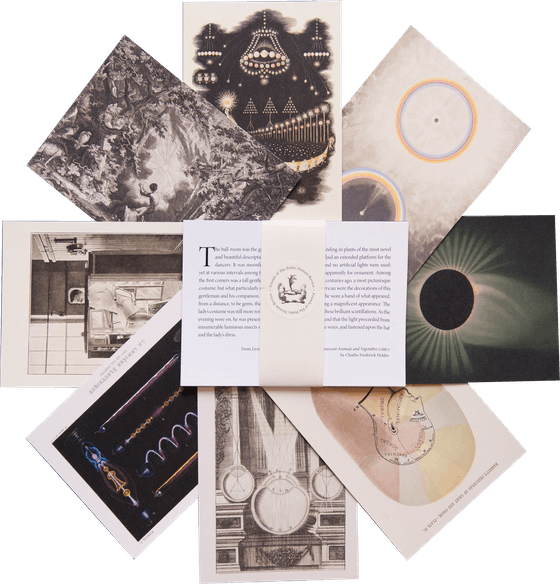
The PDR is a non-profit project kept alive by reader donations – no ads, no paywalls, just the generosity of our community. It’s a really exciting model, but we need your help to keep it thriving. Visit our support page to become a Friend and receive our themed postcard packs. Or give a one-off donation. Already a supporter? A huge thank you for making all this possible.


 | Underlying Work Rights | PD Worldwide |
| Digital Copy Rights |
| |
 | Download | Right click on image or see source for higher res versions |
Sep 8, 2026