

“What Has He Done to Deserve This?”: American Anti-Metric Cartoon from 1917

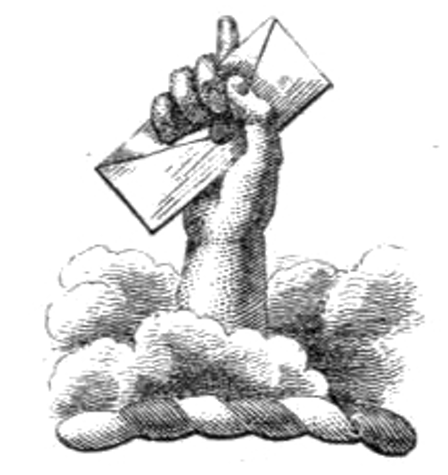
H. P. Palmer’s cartoon captioned “What Has He Done to Deserve This?”, from American Machinist, vol. 47 (July–December 1917) — Source.
Wearing a factory worker’s cap, striped overalls over his star-spangled vest, Uncle Sam stares forlornly downward. He is manacled at the wrists and ankles, looming against a silhouetted background of water towers and smokestacks. “WHAT HAS HE DONE TO DESERVE THIS?” the caption asks; at the end of his chains lie two circular weights. They are labeled METRIC and SYSTEM.
A bit dramatic, perhaps, but as the accompanying article in American Machinist asked, “Did it ever occur to you that in changing to the metric system of weights and measurements you reach the very vitals of all business in this country from the smallest to the greatest?” It was 1917, and the United States was now, by any measure, a world power — would it also have to use the world’s measures?
Metrication had begun in France in the 1790s, under the revolutionary government, yet Thomas Jefferson’s attempt to import the system to the US was stymied by pirates. Jefferson had tasked the French botanist Joseph Dombey with bringing two physical standards of measurement — the meter and the grave (the kilogram’s precursor) — to America, but his ship was captured by British privateers en route. Dombey found himself imprisoned in the Caribbean; Jefferson was left without the measures he desired. Although the metric system spread across Europe over the following century, resistance by both American and British manufacturers kept customary units in force in the anglosphere. This was despite a number of laws and treaties — the Metric Act of 1866, which legally protected the metric system’s use in US commerce; the US signing of the 1875 Meter Convention, which created the International Bureau of Weights and Measures — that sought to better integrate America into the metric world. Since 1893, US customary standards for length and mass have been based upon metric standards, with the foot and pound legally defined by their relationship to the meter and kilogram. Despite the metric system undergirding these units, it continued to represent, for some, a profoundly un-English system. “Why Force Us to Speak a Foreign Language?” the 1917 American Machinist article’s title asked.
J. P. Brophy, author of the article and vice president of the Cleveland Automatic Machine Co., had perhaps been alarmed by the reports that, faced with the wartime need to read French maps and coordinate with French troops, the US Army had begun using the metric system. US soldiers now traversed kilometers, not miles, to impose American might. For Brophy, the pages of American Machinist were a space for debate. He was a passionate and frequent contributor, although his candor had gotten him into trouble in the past. (Notably, he bragged about Cleveland Automatic’s ability to produce acid-coated explosive shells — extremely lethal in trench warfare — which earned him a public dressing down by the Department of Commerce.) His anti-metric system contributions do not seem to have created as much controversy; indeed, he proved victorious, perhaps because of the efficacy of the accompanying cartoon.
Metrication proceeded piecemeal in a variety of industries, but various official efforts, like the Metric Conversion Act of 1975 and Executive Order 12770, which ordered departments of the government’s executive branch to convert to metric, would have little nationwide influence. Customary units remain a mainstay of American life, with occasionally spectacular results: in 1999, a $125 million Mars orbiter project burned to a crisp because NASA had used metric units and Lockheed Martin customary ones.
“If the metric system was forced upon us tomorrow”, Brophy had written, “it would be one of the greatest tangles the American people have ever had to contend with. It is almost ridiculous to think about, and still we have men of importance who make our laws who have failed to realize what a burden this would mean to the citizens of this country.” Nowadays, many American institutions opt for the metric system, including the National Institute of Standards and Technology. They seem to be doing just fine.
Enjoyed this piece? We need your help to keep publishing.
The PDR is a non-profit project kept alive by reader donations – no ads, no paywalls, just the generosity of our community. It’s a really exciting model, but we need your help to keep it thriving. Visit our support page to become a Friend and receive our themed postcard packs. Or give a one-off donation. Already a supporter? A huge thank you for making all this possible.


 | Underlying Work Rights | PD Worldwide |
| Digital Copy Rights |
| |
 | Download | Right click on image or see source for higher res version |
Nov 24, 2026